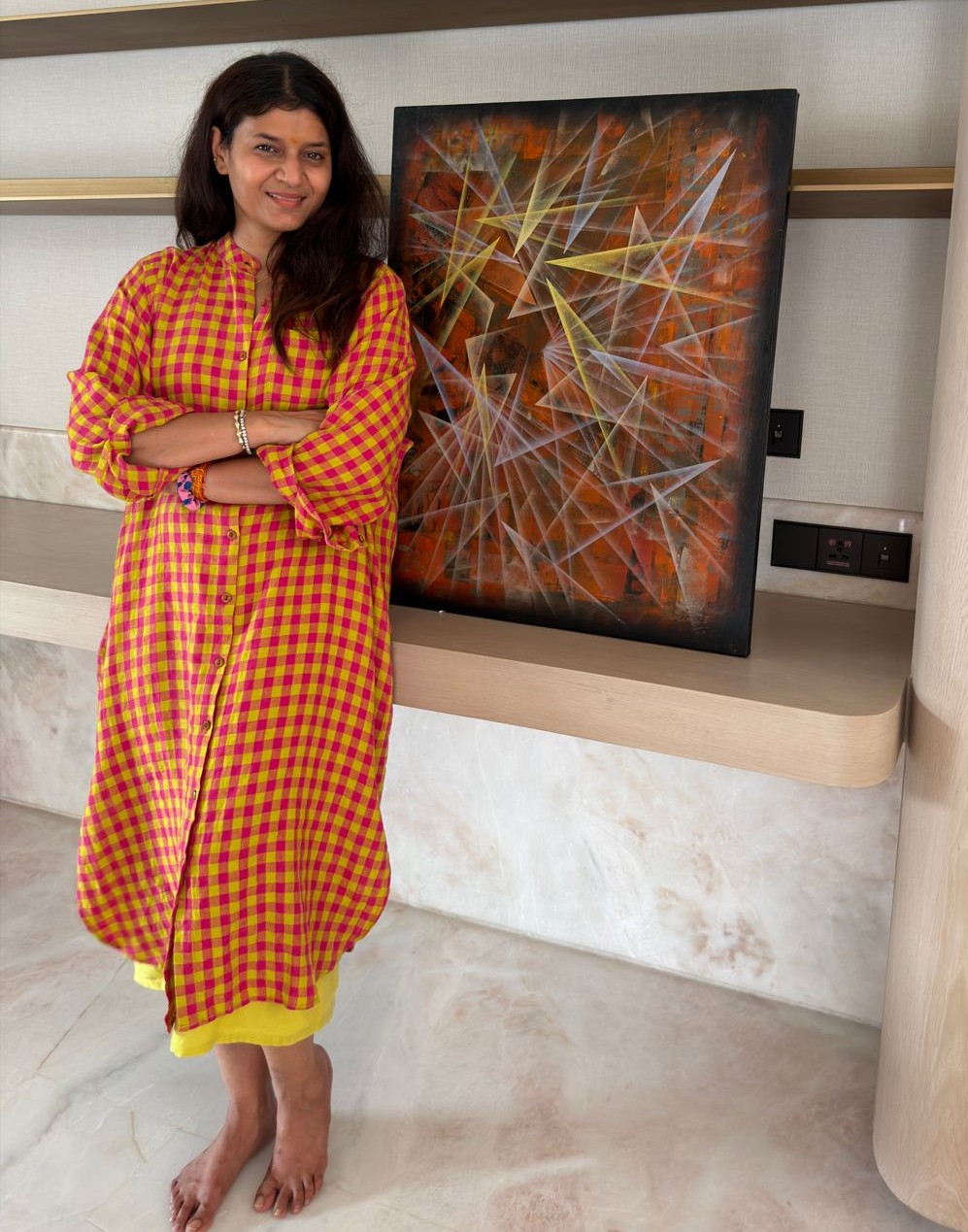
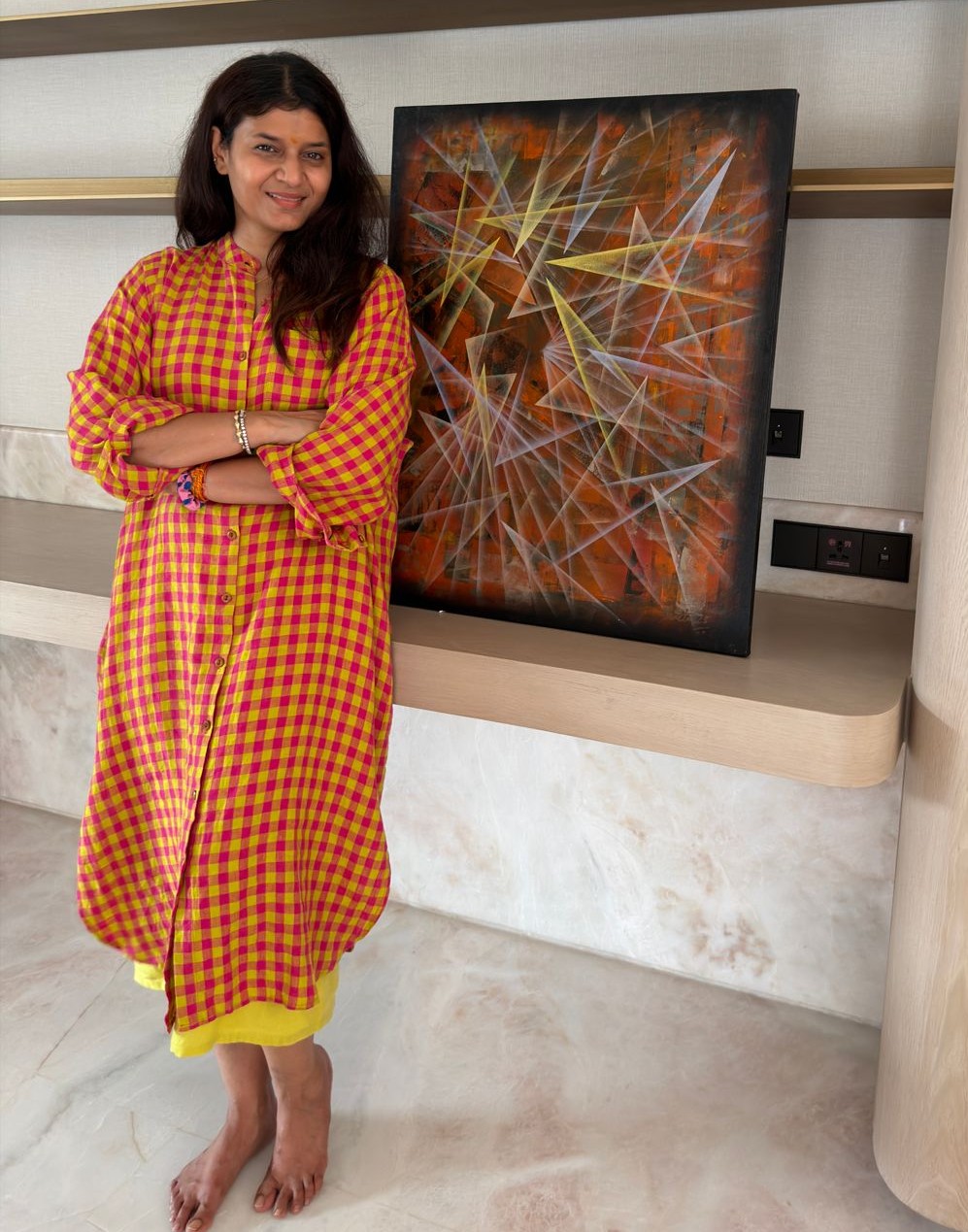
In 2020, Sweta Agarwal was not an artist. She was a professional with a full life, living in Kolkata, somewhere between a career and a quiet restlessness she couldn't quite name.
Then the world went still. And in that stillness, she picked up a brush.
She started with watercolours — small, manageable, forgiving. No teacher, no course. Just paper and pigment and a lot of time. "I didn't know what I was doing," she says. "But I knew I needed to be doing it." The watercolours became acrylics. The small sheets became canvases. The canvases got larger. And somewhere in the stretch of that first year, she discovered that she had been looking for a language, and had found one.
What she paints — and why.
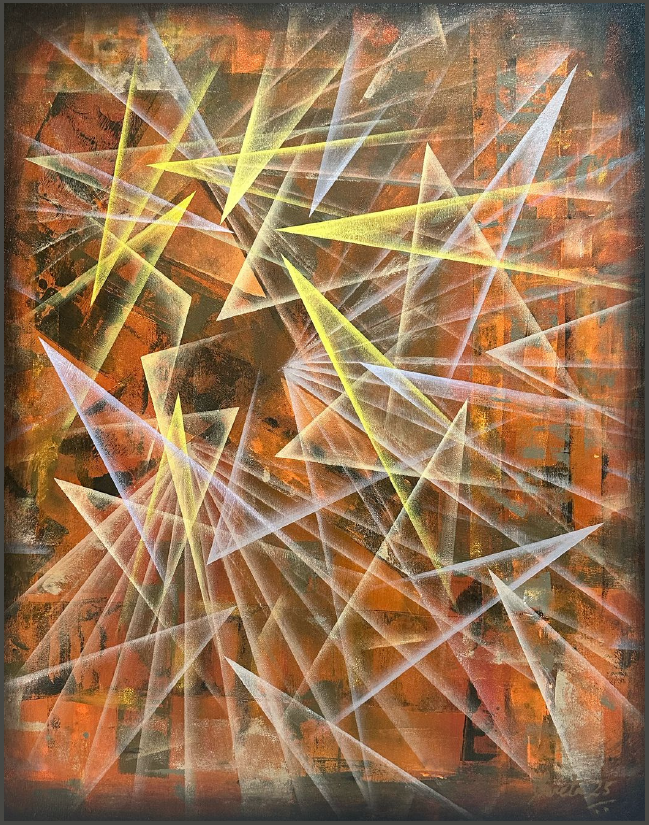
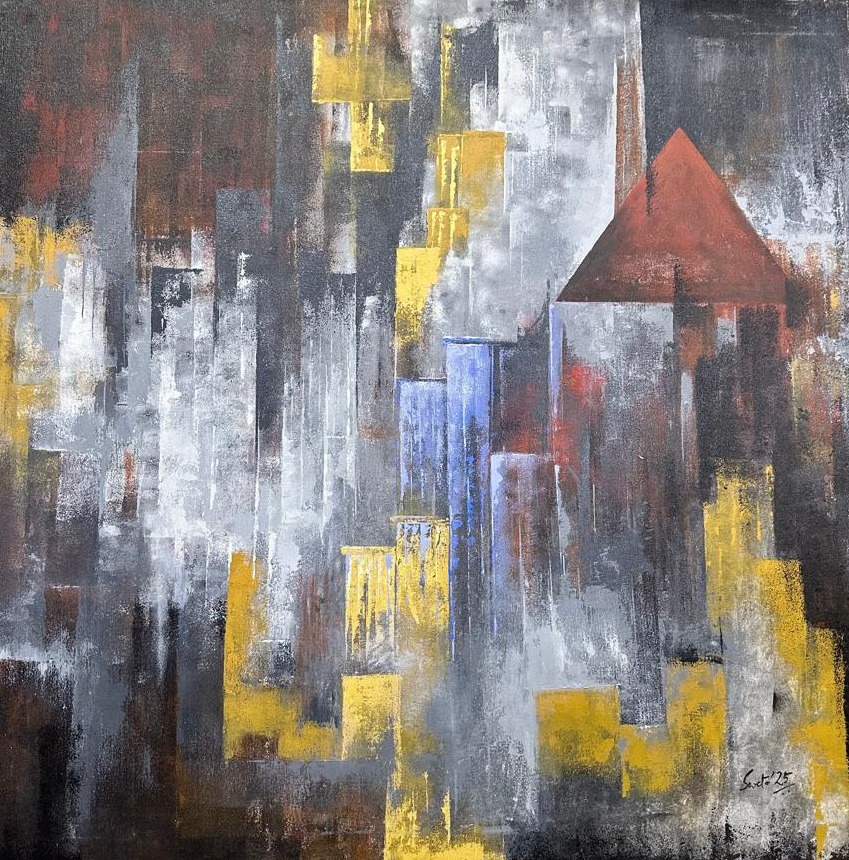
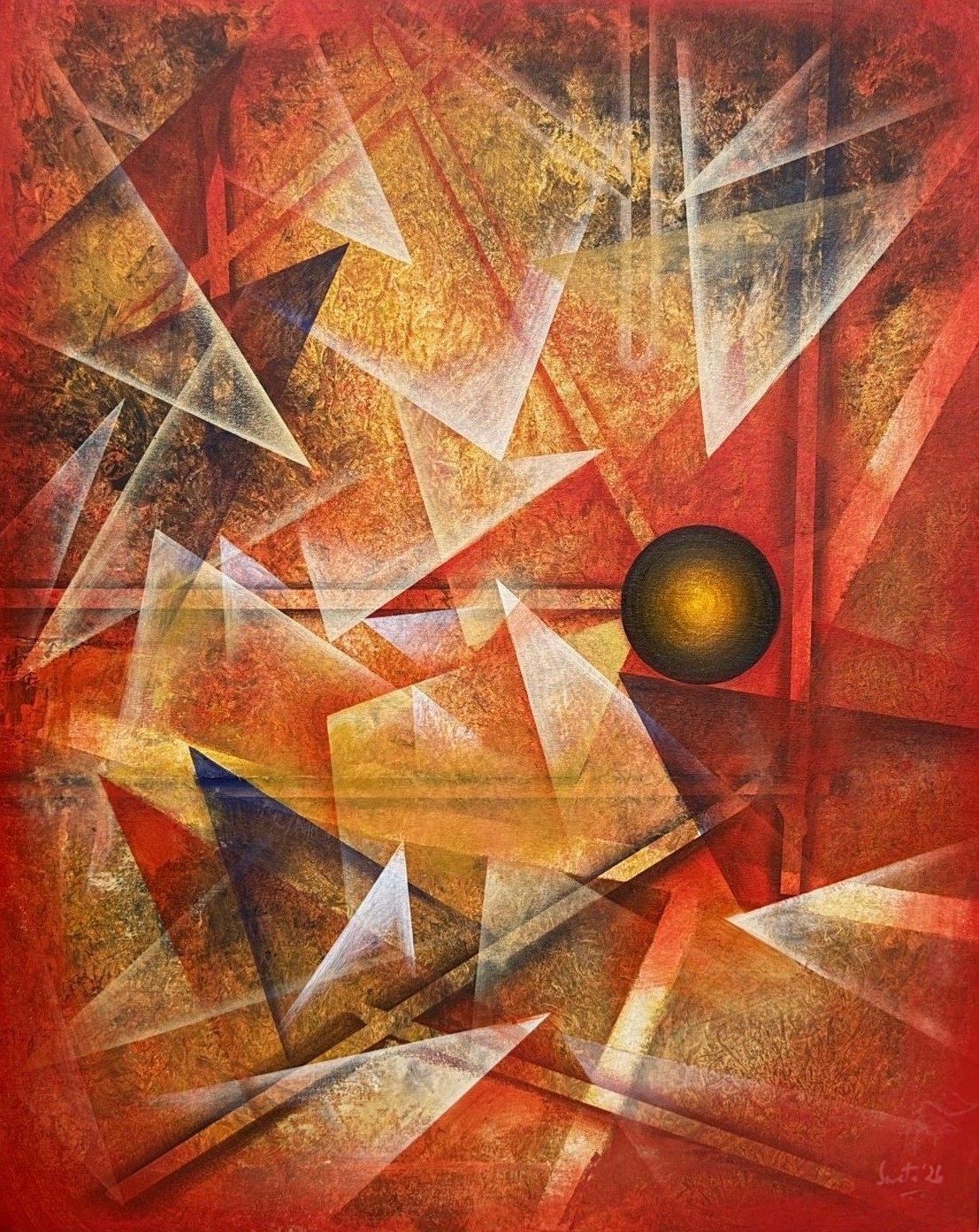
Sweta's work is abstract, but not cold. Standing in front of one of her pieces for the first time, most people describe the same thing: from across the room, it reads as movement — layered, urgent, almost chaotic. Step closer, and something shifts. The chaos resolves into texture, decision, intention. There is quiet underneath all that motion.
She paints without a plan. Each canvas begins not with a sketch but with a feeling — something she's been carrying, or something she walked into the studio with that morning. She lays down colour, then responds to it. The work grows in layers, each one in conversation with the last.
I don't start with an idea. I start with an emotion and I let the layers decide where it goes. Sometimes the painting surprises me. Those are the best ones.
Her recurring subjects — mountains dissolving into mist, geometric forms colliding and settling, the exact moment just before light breaks through — are not literal landscapes. They are emotional ones. She paints the feeling of altitude, not altitude itself. The sensation of things resolving, not resolution.
The triangle, and the pyramid.
If you look across Sweta's body of work, triangles appear everywhere. Pyramidal forms, angular geometries, shapes that converge at a point. This is not an accident.
Hyderabad's Ramoji Film City has a vast pyramid structure visible from the road. Sweta drove past it often before she started painting. She thought about it a great deal — the way the pyramid channels energy upward, the ancient belief in that convergence. When she started working abstractly, the triangle kept appearing. She let it.
"The triangle is about direction," she explains. "It takes disparate things and moves them toward a point. I think that's what I'm always trying to do — take chaos and find where it's pointing."
It is a fitting description of the work itself.
The studio — La Toile.
Sweta works out of her studio in Kolkata, which she has named La Toile — the canvas, in French. The name matters to her. A toile is a working cloth, a draft, a prototype. It suggests that the work is always in progress, always a draft of something larger being worked out.
She paints at all hours. Not on a schedule. When something arrives, she goes to the studio. Her process is physical — she moves around the canvas, sometimes works flat on the floor, uses her hands as much as her brushes. The paintings are built up in layers over days or weeks, each session adding something, some sessions taking things away.
"I over-paint sometimes," she admits. "I'll have something I love and I'll ruin it. But I've learned to let it go. The next layer is always more honest than the one before."
What she hopes you feel.
Sweta does not name her paintings easily. She resists the interpretive label — the title that tells you what to think before you've had the chance to think it yourself. Her titles tend toward the elemental: Prismatique. Trinity. Confluence. Solstice. Bloom. They gesture rather than explain.
What she wants, more than anything, is for her work to do something to the room it lives in. Not to hang quietly on a wall. To change the quality of the air around it.
"When I see someone stand in front of one of my pieces and go quiet — not because they're trying to understand it, but because something has actually shifted in them — that's when I know it worked."
She paints hope. She paints balance. She paints the moment before resolution, and the satisfaction of things finally settling. Her work ships pan-India from Kolkata, and it arrives with a note — the story of that particular piece, what she was working through when she made it.
Because for Sweta, as for us at Wall No. 4, the story is not separate from the painting. It is the other half of it.